12 Questions to Ask a Salesforce Consultant Before You Sign Anything
Why the Selection Process Matters More Than the Proposal
Most companies choose a Salesforce consulting partner based on a proposal and a sales call. The problem is that proposals are designed to win deals, not to give you an accurate picture of how a team actually works. The questions below are designed to give you that picture.
Ask these in your evaluation calls. The answers, and the way they are delivered, will tell you a lot.
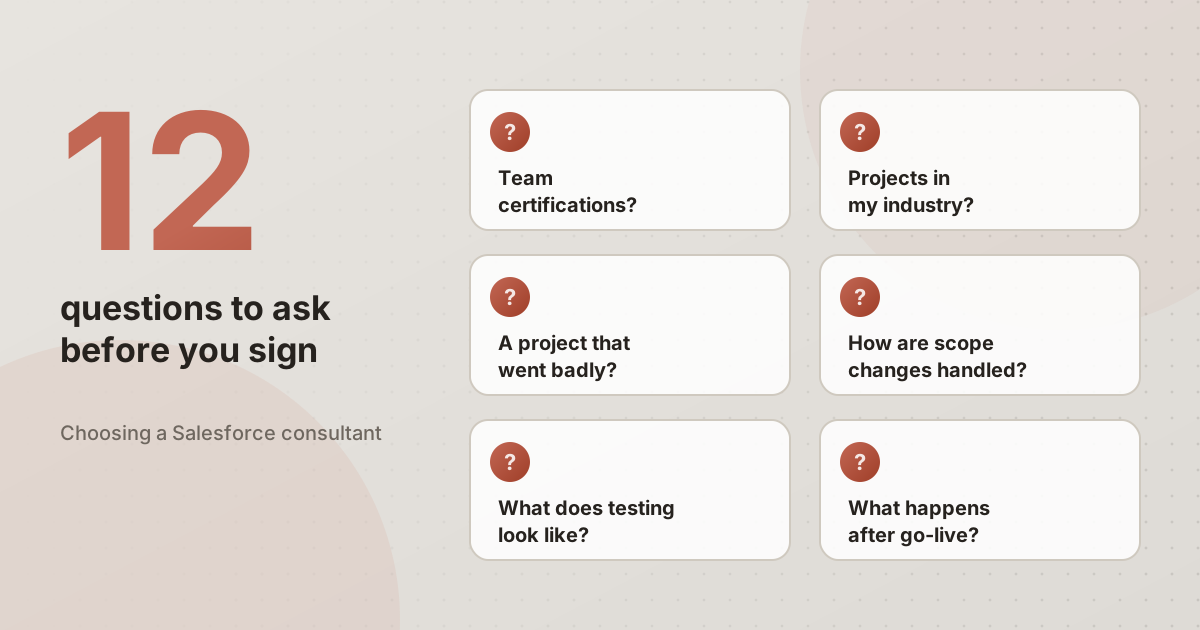
1. What certifications does the team working on my project hold?
This seems basic but is often overlooked. Some firms sell on the strength of their most certified employee, then staff projects with junior team members working toward their first cert. Ask specifically: who will be working day-to-day on this engagement, and what are their certifications?
Relevant certifications for implementation work include: Salesforce Administrator, Platform App Builder, Sales Cloud Consultant, and Platform Developer I. An architecture-heavy project should include someone with System Architect or Application Architect credentials.
2. Can you show me the last three projects you delivered in my industry?
Salesforce is used differently in manufacturing, financial services, healthcare, and SaaS. A team with deep experience in your space will understand your data model, your compliance requirements, and your typical integration landscape without needing to be educated. A team without that experience will figure it out on your timeline.
3. Walk me through a project that went badly. What happened?
Every team that has done this work for more than a year has a project that did not go to plan. How they answer this question tells you whether they are honest about their work and whether they have learned from their mistakes. Vague answers or deflection are warning signs.
4. How do you handle scope changes during the project?
Requirements change. The question is what happens when they do. Does the contract have a change order process? Is it hourly? Fixed fee? Does the consultant resist all scope changes or accommodate reasonable ones? There is no single right answer, but you need to understand the process before a scope change happens, not during one.
5. What does your testing process look like before go-live?
A professional team should describe sandbox testing, UAT (user acceptance testing) with your actual staff, and a defined sign-off process. If the answer is "we test it ourselves and then let you know when it is ready," that is not sufficient.
6. Who owns the admin credentials at the end of the project?
This should always be you. Some consulting arrangements create unhealthy dependency by controlling system access or storing credentials. Confirm upfront that you will own all admin accounts and that you will not need the consulting firm's involvement to access your own system after handoff.
7. What happens after go-live?
There is always a period after launch where things surface that were not visible during testing. Ask what the support arrangement looks like in the first 30 to 60 days. Is there a hypercare phase? What is the escalation path if something breaks on day two?
8. How do you approach user training?
A system that nobody uses is worth nothing. Ask how training is structured. Is it one generic session for everyone, or is it role-specific? Who delivers it? Are sessions recorded for future hires? Is there a reference guide that gets built?
9. How do you handle data migration from our current system?
Listen for specific answers: data audit, deduplication approach, field mapping documentation, sandbox test loads, and a defined migration window. Generic answers about "following best practices" without specifics are a red flag.
10. What are the most common mistakes you see clients make at this stage of a project?
This question rewards experience. A consultant who has done this work repeatedly will immediately name two or three specific, concrete mistakes because they have seen them play out. A less experienced team will give you a generic answer about "communication" and "alignment."
11. What is your policy on documentation?
When the project ends, you should receive documentation of what was built and why. This becomes critical when you need to modify the system later or when you bring on a new administrator. Ask what form that documentation takes and whether it is included in the project scope.
12. What would make this project fail?
A good consulting partner will be honest with you about the conditions that make implementations fail, and whether any of those conditions currently exist in your organization. If the answer is entirely vague or entirely positive, that is worth noting.
One More Thing
After the formal questions, pay attention to how the consulting team communicates in general. Are they direct? Do they push back on things that do not make sense? Do they ask good questions about your business? The best Salesforce consultants are business people who happen to know the platform deeply, not technicians who need to be told exactly what to build.
If you want to run through these questions with our team, we are happy to be evaluated against them. Book a free discovery call and bring the list.
Ready to talk about your Salesforce project?
Every engagement starts with a free discovery call. No pressure, just an honest conversation about where you are and what you are trying to build.
Frequently Asked Questions
What certifications should a Salesforce implementation consultant have?
At minimum: Salesforce Administrator and Sales Cloud Consultant. For projects with custom development, Platform Developer I is important. Larger projects should include someone holding System Architect or Application Architect credentials.
How do I know if a consulting firm is being honest about their timeline?
Ask them to walk you through the timeline phase by phase and explain what happens in each one. A credible timeline will include discovery, requirements documentation, sandbox build, UAT, training, and a post-launch support period. If any of those are missing or collapsed into a single day, push back.
Is it a red flag if a consultant agrees with everything I say?
Yes. A good Salesforce consultant should push back on approaches that are likely to cause problems. If they agree with every requirement and never raise a concern, they are either not experienced enough to see the issues, or they are prioritizing winning the deal over delivering a good outcome.
Should I own my own admin credentials?
Always. You should own the system administrator account from day one of the project. A consulting engagement should never create a situation where you need the consulting firm to access your own Salesforce org.
What documentation should I receive at the end of a project?
At minimum: a data dictionary describing all custom fields and objects, a list of all automations with a description of what each one does, the security model documentation, and training materials. Some firms also provide integration architecture diagrams for complex projects.