Salesforce CPQ Cut Quote Turnaround from Days to Hours
Results the Client Measured
3 days to 4 hours
Quote turnaround
For standard configurations with no engineering review
Down 94%
Pricing errors
Rules replaced manual spreadsheet calculations
Up 22%
Quote-to-close rate
Faster quotes won deals before competitors replied
Down 60%
Engineering reviews
Compatibility rules stopped invalid configurations early
What the Client Was Facing
Every quote needed input from sales, engineering and finance before a price could go out. A single quote took three to five working days, and manual spreadsheet pricing regularly produced errors that customers saw before anyone caught them.
What We Delivered
We implemented Salesforce CPQ with pricing rules for the full product catalogue, volume tiers, contract rates and engineering thresholds. Guided configuration checks product compatibility as reps build a quote, and approvals are only triggered when margin or specification rules require them.
This Salesforce CPQ case study covers a manufacturer of specialised industrial components whose quoting process had become a bottleneck. Every quote passed between sales, engineering and finance by email, took days, and too often went out with the wrong price. We replaced that chain with guided quoting and rule-based pricing in 11 weeks. This article explains the approach, the results, and what we would recommend to a company starting the same project today.
Why Quoting Took Three to Five Days
The company's catalogue has more than 800 products across three product lines. Each has different material grades, tolerances, volume tiers and customer-specific contract rates renegotiated every year. Quoting was genuinely complicated.
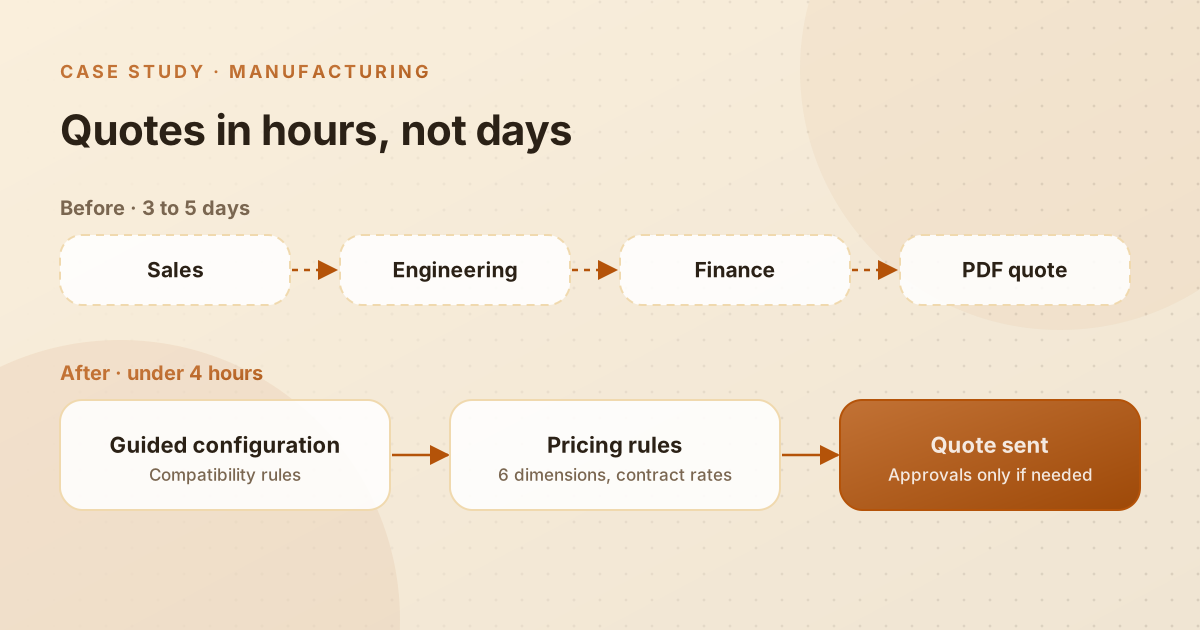
The old process ran like this. A rep filled in a request form and emailed engineering to check compatibility. Engineering replied, then finance checked the customer's contract terms and calculated the price in a spreadsheet. Finally the rep turned it into a PDF. That chain usually took three to five working days.
Errors were the bigger problem. The wrong volume tier was sometimes applied, contract discounts were missed, and on some occasions a customer received a price the company could not honour. Each correction damaged a relationship built over years.
How We Mapped Every Pricing Rule
Before configuring anything, we spent three weeks with sales, engineering and finance mapping every rule that affected price. We found six: base product cost, material grade premium, volume tier, contract discount, freight by territory and a surcharge for engineering complexity. Each became a rule in the pricing engine rather than something a person had to remember.
What We Built With Salesforce CPQ
Guided product configuration
Reps build a quote step by step and only see options compatible with what they have already chosen. If a material grade does not work with a selected tolerance, the rep finds out immediately instead of waiting for engineering to reject it.
Approvals only when they are needed
Every quote's margin is calculated automatically. Quotes above the threshold go straight to the customer. Quotes below it go to the sales director, and custom specifications trigger a parallel approval from the engineering lead.
Contract pricing applied automatically
Each customer's annual pricing agreement is loaded as a price book. When a rep quotes a contract customer, the negotiated rates apply without the rep needing to know them.
How We Rolled It Out
We went live in two phases. First, the 20 most frequently quoted products, with reps building real quotes for real customers in a sandbox so they could feel the difference before go-live. Second, the full catalogue. By then reps were comfortable with the system and the switch was uneventful.
What Changed for Sales and Engineering
Within 30 days, standard quotes were going out in under four hours. Engineering review requests fell by 60% because invalid configurations were stopped at the source. Pricing errors dropped by 94%.
The result nobody predicted was a 22% rise in quote-to-close rate. Several customers told reps they had chosen the company over a competitor simply because its quote arrived first.
Would We Use Salesforce CPQ Today
Not for a new customer. Salesforce CPQ is now end of sale, which means Salesforce no longer sells new CPQ licences to new customers. Existing customers, including this one, can keep using it, add users, renew and receive support.
For a company starting this project now, we would scope it on Revenue Cloud Advanced, the successor product built on the core Salesforce platform. The discovery work would be the same. Mapping pricing rules, approval thresholds and contract terms is what made this project succeed, whichever product holds the rules. Our CPQ and Revenue Cloud service covers both new projects and existing CPQ orgs.
Lessons for Complex Quoting Projects
- Map pricing rules with the people who apply them. Finance and engineering knew rules sales had never seen written down.
- Only route approvals that add value. Automatic thresholds kept managers out of routine quotes.
- Pilot with real quotes. Reps trusted the system because they had already used it on live deals.
Struggling with slow or error-prone quoting? Talk to us about a pricing discovery workshop.
Services Delivered
Frequently Asked Questions
Is Salesforce CPQ still available?
Salesforce CPQ is end of sale, so Salesforce no longer sells new CPQ licences to new customers. Existing customers can keep using it, add users, renew and receive support. For new quoting projects, Salesforce positions Revenue Cloud Advanced as the successor product.
How much faster can quoting be with CPQ?
In this project, standard quotes went from three to five working days to under four hours. The speed came from encoding pricing rules, compatibility checks and approval thresholds in the system, so quotes no longer waited for emails between sales, engineering and finance.
How do you reduce pricing errors in quotes?
Move pricing logic out of spreadsheets and into rules. Volume tiers, contract discounts, freight and surcharges are applied automatically, and customer-specific rates come from price books. In this project, pricing errors fell by 94% once reps no longer calculated prices by hand.
What should we do before starting a quoting project?
Map every rule that affects price with the people who apply it, usually sales, finance and engineering. Agree approval thresholds and identify contract pricing. This discovery work matters more than the product choice and applies equally to Salesforce CPQ and Revenue Cloud Advanced.
Facing a similar challenge?
Book a free 45-minute discovery call. We will look at your current setup and tell you honestly what we think needs to change.
Book a Free Call