The Ultimate Guide to Salesforce Implementations
Why Salesforce Implementations Dictate Your CRM Success
Are you looking to modernize your sales operations but unsure where to start? A well-executed Salesforce implementation is the foundation of any high-performing sales organization. When configured correctly, it brings teams together, breaks down data silos, and accelerates revenue growth. In this guide, we dive deeply into how professional salesforce implementations work and what you need to know to succeed.
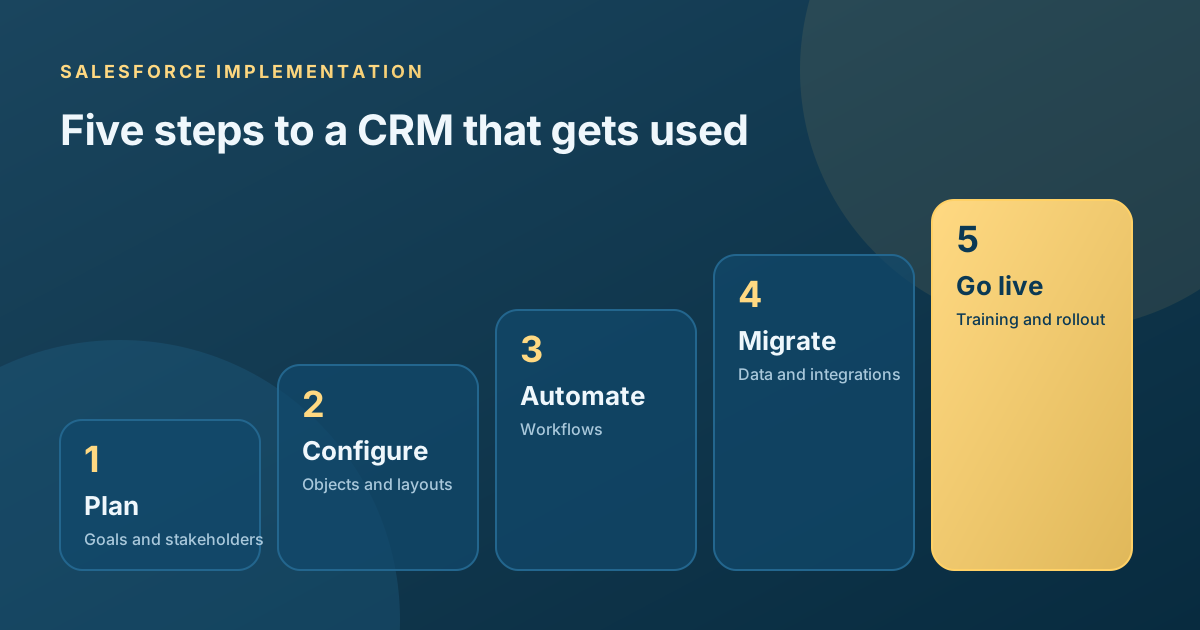
Step 1: Strategic Planning and Goal Setting
Every successful software deployment begins with a clear strategy. Rushing into the technical setup without aligning on business goals often leads to low adoption and wasted resources.
- Define clear objectives: Do you want to increase lead conversion rates, reduce administrative time, or improve customer retention?
- Identify stakeholders: Involve sales leaders, marketing heads, and customer support early in the process.
- Audit current workflows: Map out your existing sales process to understand what works and what needs redesigning.
By establishing these fundamentals, you set a north star that guides all subsequent configuration decisions.
Step 2: Core Platform and Org Customization
Standard out-of-the-box Salesforce requires thoughtful Org customization to align with your unique business processes. This isn't just about adding new custom fields—it's about architecting a data structure that supports your specific sales motions.
A staggering 68% of companies struggle with CRM adoption due to overly complex interfaces. To avoid this, our process includes:
- Tailoring object relationships (Custom Objects) to match your data model.
- Creating simplified page layouts that only show relevant information to the right users.
- Implementing robust security models using profiles, roles, and permission sets.
Step 3: Mastering Workflow Setup and Automation
Perhaps the most powerful aspect of a successful deployment is the workflow setup. Proper automation removes the burden of repetitive administrative tasks from your sales reps, allowing them to focus entirely on closing deals.
- Automated lead routing to ensure inquiries are instantly assigned to the right territory owner.
- Email alerts for high-priority opportunities or stalled deals.
- Guided selling paths that prompt reps on exactly what to do at each deal stage.
We typically see clients regain up to 15 hours per week per rep simply by implementing intelligent workflow automation.
Step 4: Data Migration and Integration
Your CRM is only as good as the data living within it. Moving data from legacy systems (like HubSpot, Zoho, or spreadsheets) requires strict data hygiene practices.
Our approach involves cleansing existing data, deduplicating records, and establishing clear mapping rules before the migration occurs. Furthermore, connecting your Salesforce instance with your ERP, marketing automation, or billing software creates a unified source of truth across the enterprise.
Step 5: Training and Go-Live Strategy
A flawless technical build is irrelevant if your team refuses to use it. Comprehensive training tailored to different user roles drives adoption from day one.
We recommend a phased rollout approach. Launch the core functionalities to a select group of "super users" first, gather feedback, refine the platform, and then expand to the broader organization.
Ready to Transform Your CRM Experience?
Expert salesforce implementations require deep technical knowledge combined with strong business acumen. If you are ready to stop fighting with your CRM and start using it as an engine for growth, our team of certified consultants is here to help.
Contact Alu Cloud Consulting today to discuss your next big digital transformation project and schedule a comprehensive system audit.
Ready to talk about your Salesforce project?
Every engagement starts with a free discovery call. No pressure, just an honest conversation about where you are and what you are trying to build.
Frequently Asked Questions
How long does a standard Salesforce implementation take?
A typical mid-market implementation takes between 6 to 12 weeks, depending on the complexity of integrations and required custom development.
Do we need ongoing support after go-live?
Yes. Businesses evolve, and your CRM needs to evolve with them. We highly recommend managed services for continuous optimization, ad-hoc training, and ongoing Org customization.
How do we handle our existing messy data?
We perform a thorough data audit before migration, helping you establish deduplication rules and data hygiene standards to ensure your new system starts clean.
Can we customize Salesforce ourselves later?
Absolutely. We build solutions using declarative (point-and-click) tools wherever possible, empowering your internal administrators to make straightforward changes independently.
What is the biggest risk during implementation?
The biggest risk is poor user adoption. This usually stems from lacking a clear executive sponsor or failing to provide comprehensive role-based training before go-live.
Do you provide training for our sales team?
Yes, comprehensive training is a core pillar of our methodology. We provide "train the trainer" sessions as well as end-user training tailored directly to your custom Org setup.