
The Seven New Agentforce Agents Explained
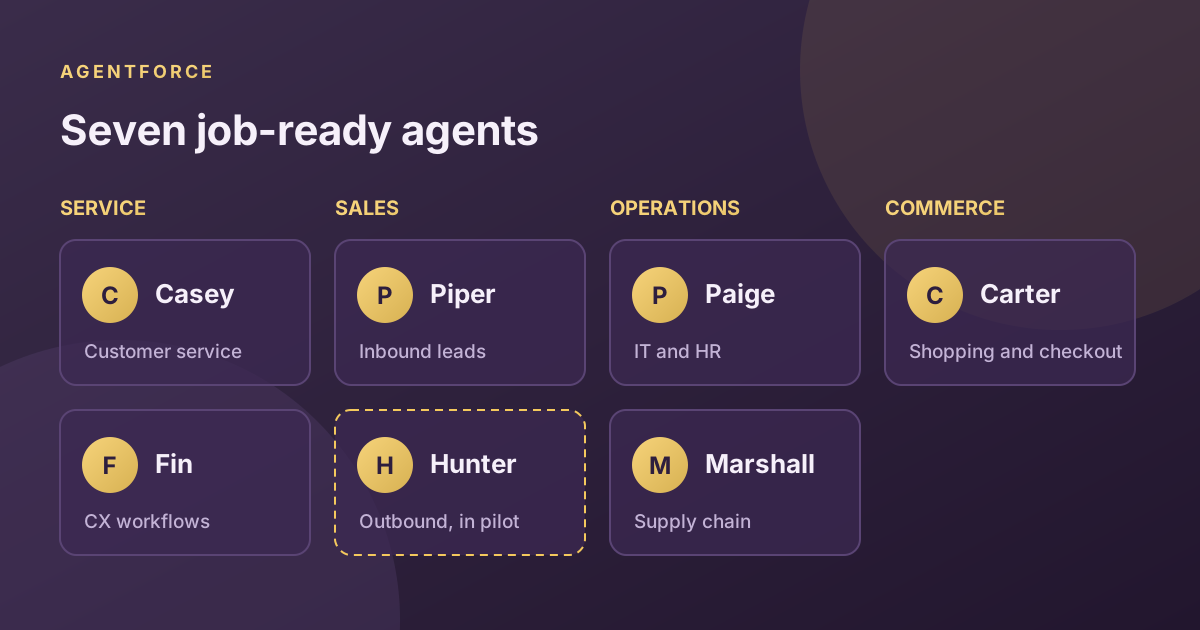
In September 2026 Salesforce launched seven Agentforce agents, each designed for a specific job. Until now, most companies had to design an AI agent from scratch, which meant a lot of configuration before they saw any value. Named agents such as Casey, Piper and Hunter start with the job already defined. This guide explains what each agent does, which are generally available, how the new long-horizon runtime works, and how to choose where to start.
What Are the New Agentforce Agents
An AI agent is software that can understand a request, decide what to do and take action in your systems, rather than only answering a question. Salesforce's new portfolio packages agents for seven common jobs.
| Agent | Job | Where it works | Status |
|---|---|---|---|
| Casey | Resolves customer service issues such as FAQs, returns and account changes, with escalation to a person | Voice, SMS, WhatsApp, web chat | Generally available |
| Fin | Handles complex customer experience workflows | Multiple channels | Generally available |
| Piper | Engages and qualifies inbound leads | Websites, inboxes | Generally available |
| Hunter | Works outbound pipeline from research to outreach | Sales systems | Pilot; GA planned November 2026 |
| Paige | Handles IT and HR service requests | Slack, portals, employee tools | Generally available |
| Marshall | Coordinates supply chain and back-office work | Back-office systems | Generally available |
| Carter | Helps shoppers find products and check out | In-chat commerce | Generally available |
Why Job-Ready Agents Matter for Businesses
The hardest part of an agent project is rarely the AI. It is deciding exactly what the agent should do, what it must never do, and when it hands over to a person. A job-ready agent comes with those decisions largely made, so your team configures and tests rather than designs from zero.
Salesforce has published some early customer results. It reports that Engine's help agent resolves 50% of chat inquiries, that Hunter built 60% of Perk's sales pipeline, that Paige resolves 70% of administrative requests at Autism Queensland, and that Fin resolves 79% of Anthropic's conversations autonomously. These are vendor-reported figures, but they give a sense of the ceiling when data and processes are in good shape.
What Each Agent Does in Practice
Customer service with Casey and Fin
Casey is the obvious first agent for most service teams. It covers the questions that fill queues every day: order status, returns, simple account changes. WhatsApp support matters for businesses in the UAE, the wider GCC and India, where many customers prefer it to email. Fin is aimed at longer, multi-step customer journeys that cross channels.
Sales with Piper and Hunter
Piper responds to inbound leads and qualifies them, which helps when leads arrive outside working hours or faster than your team can reply. Hunter goes the other way. It researches accounts, runs outreach and stays on a deal alongside a human seller.
Internal operations with Paige and Marshall
Paige answers IT and HR requests in Slack and employee portals, such as password resets or leave policy questions. Marshall coordinates supply chain and back-office tasks and keeps an audit record of what it did.
Commerce with Carter
Carter helps shoppers discover products and complete checkout inside a chat conversation. It is most relevant to retailers already using Salesforce Commerce.
How Hunter and the Long-Horizon Runtime Work
Most AI tools complete one task and stop. Hunter is the first agent on Salesforce's long-horizon runtime, which lets an agent pursue a goal across days and weeks. Salesforce describes three parts to it:
- Memory, so the agent keeps context across many sessions.
- Durable execution, so it keeps a plan running over time and adjusts as it learns.
- Dynamic steering, so users can change its behaviour through feedback without rebuilding it.
Our view is that this is where agents become genuinely useful for sales, and also where data quality matters most. An agent that works an account for a month will repeat any mistake in that account's data for a month. Salesforce has said more agents will move onto this runtime over time.
How to Choose Your First Agentforce Agent
- Start where volume is high and risk is low. Routine service questions or inbound lead qualification are good candidates.
- Choose a process you already measure. Case deflection, first response time and lead-to-meeting rate are easy to compare before and after.
- Design the human handoff first. Decide which topics always go to a person and what context the agent passes on.
- Match the channel to your customers. If most of them message you on WhatsApp, a web chat pilot will not tell you much.
- Plan for Hunter separately. It is still a pilot. Use the months before general availability to clean account, contact and activity data.
Common Mistakes With a First Agent
- Launching several agents at once. Each one needs its own testing, handoff rules and owner.
- Giving the agent admin-level access. Agents should have their own permission sets with only what the job needs.
- Relying on out-of-date knowledge articles. Casey and Fin can only give answers as good as the content they draw on.
- No named owner. Someone in the business, as well as IT, must be accountable for what the agent does.
How Alu Cloud Consulting Can Help
We help teams choose a first agent, prepare the data and permissions behind it, and run a measured pilot. Before any build, we recommend working through our Agentforce readiness checklist. If you are weighing up the wider set of launches, our Dreamforce 2026 summary puts the agents in context.
Thinking about Casey, Piper or Hunter? Talk to us about a scoped pilot with clear success measures.
Ready to talk about your Salesforce project?
Every engagement starts with a free discovery call. No pressure, just an honest conversation about where you are and what you are trying to build.
Frequently Asked Questions
What are the seven new Agentforce agents?
Salesforce launched Casey for customer service, Fin for complex customer experience workflows, Piper for inbound leads, Hunter for outbound sales, Paige for IT and HR requests, Marshall for supply chain and back-office work, and Carter for shopping and checkout. Each is designed for a specific job, so less configuration is needed before you see value.
When will the Hunter agent be generally available?
Hunter is currently in pilot, with general availability planned for November 2026. It is the first agent to run on the long-horizon runtime, which lets it pursue a sales goal over days or weeks. Use the time before release to clean account, contact and activity data.
Which Agentforce agent should we deploy first?
Start with a high-volume, low-risk process that you already measure. For most businesses, that means Casey for routine service questions or Piper for inbound lead qualification. Both give clear before and after measures, such as case deflection or lead response time, and both have well-understood handoff points to a person.
Does the Casey agent support WhatsApp?
Yes. Salesforce says Casey resolves customer service issues across voice, SMS, WhatsApp and web chat. This is useful for businesses in the UAE, the wider GCC and India, where many customers prefer messaging apps to email or phone. Check your licences and channel set-up before you plan a WhatsApp pilot.
What is the Agentforce long-horizon runtime?
It is the part of Agentforce that lets an agent keep working towards a goal across days and weeks, instead of finishing a single task. Salesforce describes three features: memory across sessions, durable execution that keeps a plan running and adjusts it, and dynamic steering so users can change the agent through feedback.