Dreamforce 2026 Announcements That Matter for Business
The Dreamforce 2026 announcements, made in San Francisco from 15 to 17 September, all point in one direction. Salesforce wants people and AI agents to use its platform from anywhere, and the Salesforce screen is becoming just one option. For business leaders, the question is which launches are ready to use, which are still pilots, and what groundwork your team should do now. This article covers each major announcement in plain English, its current status, and the practical steps we are recommending to clients.
What Salesforce Announced at Dreamforce 2026
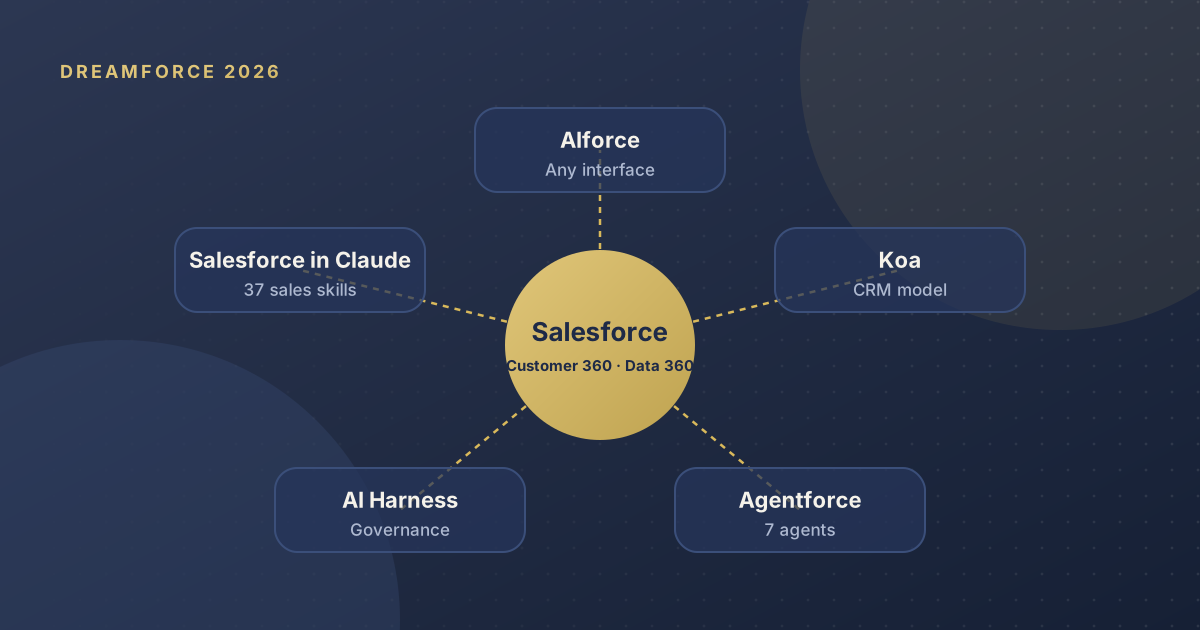
Five launches matter most for Salesforce customers. The status column reflects what Salesforce has published as of late September 2026.
| Announcement | What it is | Status |
|---|---|---|
| AIforce | An interface layer that brings Salesforce data, workflows and actions into Claude, Slack, Lightning and custom apps | Parts available now, parts in beta |
| Koa | Salesforce's first CRM reasoning model, built on NVIDIA Nemotron | Pilot; general availability expected winter 2026 in US regions |
| Salesforce in Claude | A plugin that gives Claude 37 prebuilt sales skills over live Salesforce data | Beta |
| Seven Agentforce agents | Named agents for service, sales, IT and HR, commerce and operations | Six generally available; Hunter in pilot until November 2026 |
| Enterprise AI Harness | A governance framework with an AI Control Plane for every agent in the business | Rolling out from early fiscal FY28 |
Why the Dreamforce 2026 Announcements Matter for Businesses
For most of Salesforce's history, value came from people logging in and keeping records up to date. This year's launches change who uses the data and where. A sales rep might now ask Claude for a pipeline summary. An agent might chase a lead for three weeks without anyone opening a record.
That shift has a practical consequence. Every one of these tools reads your existing data and respects your existing permissions. If your records are incomplete or your sharing model is too open, AI will expose those problems faster than any user would.
The Main Launches in Plain English
AIforce brings Salesforce to other interfaces
Salesforce describes AIforce as a live interface layer that takes its platform to wherever people and agents already work. It groups four things together: Salesforce in Claude, Slackforce, Agentforce Coworker inside Lightning, and a Headless Toolkit for developers. Agentforce Coworker is available now. Salesforce says it reached 100,000 users within 35 days.
Koa is Salesforce's own CRM model
Koa is a reasoning model trained specifically for CRM tasks such as updating an opportunity or routing a case. According to Salesforce, it matches or beats leading models on its own CRM benchmark with three times fewer errors, and no customer data was used to train it. It is currently a pilot. Our Koa explainer covers what this could mean for AI costs.
Salesforce in Claude reaches beta
Sellers can work with pipeline, accounts and follow-ups from inside Claude, using 37 prebuilt sales skills. Pilot customers include Deloitte, GitLab and Legora. We have written up three sales use cases worth piloting.
Seven job-ready Agentforce agents
Instead of a blank agent builder, Salesforce now offers named agents for specific roles: Casey for customer service, Piper for inbound leads, Hunter for outbound sales, and four others. Hunter is the first to run on a new long-horizon runtime, which lets it work towards a goal over days and weeks. See our guide to all seven agents.
The Enterprise AI Harness for governance
The Enterprise AI Harness is Salesforce's framework for controlling AI across a business. It combines six capabilities with an AI Control Plane where you can register agents, set policy, watch behaviour and control cost. Most of the unified experience arrives from early fiscal FY28, which starts in February 2027. Our article on AI agent governance explains how to prepare.
New Google Cloud options
Hyperforce on Google Cloud is planned for general availability in North America in November 2026, with more regions in 2027. Gemini models are also available inside Agentforce's Prompt Builder and Reasoning Engine.
What to Prioritise Before 2027
Most of these features are either new or not yet generally available. That gives you a few months to get the foundations right. Our recommendation, in order:
- Review your permission model. AIforce, Salesforce in Claude and every agent see what the user or agent identity can see. Remove access that nobody needs.
- Clean the data your first agent will use. Duplicate accounts and stale contacts produce wrong answers at scale.
- Pick one measurable use case. Service deflection and inbound lead qualification are usually the safest starting points.
- Start an agent register. A simple list of every agent, its owner and what it can touch will make the AI Control Plane far easier to adopt later.
- Track AI usage cost per process. When cheaper models such as Koa arrive, you will know where they save money.
Common Mistakes After a Big Salesforce Event
- Budgeting for pilot features as if they were live. Koa and Hunter are pilots. Plan around what is generally available and treat the rest as upside.
- Ignoring regional availability. Koa's general availability is planned for US regions. Organisations with data residency needs in the UAE, India or Europe should check before planning around it.
- Switching on AI before fixing access. An over-shared record in Lightning becomes an over-shared answer in Claude or Slack.
- Buying every new product at once. One working agent teaches you more than five half-configured ones.
How Alu Cloud Consulting Can Help
We help Salesforce customers turn announcements like these into a realistic plan. That usually starts with a Salesforce health check covering data quality, permissions and automation, followed by a short list of AI use cases ranked by value and risk. If you want to test your organisation against the basics first, use our Agentforce readiness checklist.
Planning your 2027 Salesforce roadmap? Talk to our team about which Dreamforce launches are worth acting on now.
Ready to talk about your Salesforce project?
Every engagement starts with a free discovery call. No pressure, just an honest conversation about where you are and what you are trying to build.
Frequently Asked Questions
What were the main Dreamforce 2026 announcements?
The main launches were AIforce, which brings Salesforce into Claude, Slack, Lightning and custom apps; Koa, a CRM reasoning model built on NVIDIA Nemotron; Salesforce in Claude with 37 sales skills; seven job-ready Agentforce agents; and the Enterprise AI Harness with an AI Control Plane for governing agents across the business.
When and where was Dreamforce 2026?
Dreamforce 2026 took place from 15 to 17 September 2026 at Moscone Center in San Francisco. Several related announcements, including the Enterprise AI Harness and the seven named Agentforce agents, were published in the days just before the event, so it is worth reading the whole of September 2026 as one release cycle.
Which Dreamforce 2026 features can we use today?
Six of the seven Agentforce agents are generally available, as is Agentforce Coworker in Lightning. Salesforce in Claude is in beta. Koa and the Hunter sales agent are pilots, with Hunter planned for general availability in November 2026. The unified Enterprise AI Harness experience starts rolling out in early fiscal FY28, from February 2027.
Is Koa available outside the United States?
Not yet. Salesforce expects general availability for Koa in winter 2026 in US regions. Organisations with data residency requirements in the UAE, India, Europe or elsewhere should confirm regional timing with their Salesforce account team before building plans or budgets around it.
What should we do first after Dreamforce 2026?
Start with the foundations every new feature relies on. Review your permission model, clean the data your first AI use case will touch, and choose one measurable process for a pilot. These steps pay off whichever Dreamforce launches you adopt, and they reduce risk when features move from beta to general availability.